
Tag: Web Development & E-commerce

  • Top Web Design and UI/UX Trends to Elevate Your Brand This Year

    Top Web Design and UI/UX Trends to Elevate Your Brand This Year

    In the digital landscape, your website is often the very first interaction a potential customer has with your brand. The human brain processes visual information at an astonishing speed; research indicates that users form an opinion about your website—and by extension, your entire business—in roughly 50 milliseconds. In that blink of an eye, they decide whether to stay and explore or hit the back button and visit your competitor.

    However, modern web development is no longer just about making things look "pretty." A beautiful website that fails to generate revenue is not a business asset; it is simply an expensive digital sculpture. True digital success lies at the intersection of aesthetic brilliance and relentless functionality.

    As consumer expectations evolve, the trends dictating User Interface (UI) and User Experience (UX) design are shifting heavily toward personalization, accessibility, and conversion optimization. If your website feels like a static brochure from five years ago, you are actively losing market share. Here is a deep dive into the top web design and UI/UX trends shaping the internet this year, and how you can leverage them to turn casual visitors into loyal customers.
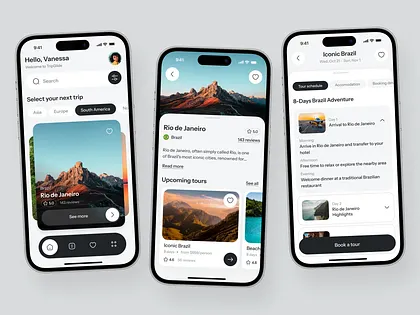
    The Evolution from Static to Dynamic Design

    For over a decade, web design was largely static. A company built a website, pushed it live, and every single user who visited saw the exact same layout, the same hero image, and the same promotional banner. Today, that one-size-fits-all approach is obsolete.

    Modern UI/UX is fluid. The goal is to reduce cognitive load—the amount of mental effort required for a user to find what they need. When you lower cognitive load, you instantly increase conversion rates. The following trends reflect this shift toward intuitive, low-friction digital environments.

    1. AI-Driven Personalization and Dynamic UI

    Artificial intelligence is fundamentally rewiring how websites function. We are moving past simple product recommendation widgets into fully dynamic user interfaces. Modern websites can adapt their layouts, messaging, and calls-to-action (CTAs) in real-time based on the specific behavior of the person viewing the screen.

    How It Drives Conversions:

    If a user visits your B2B software website and spends five minutes reading a blog post about enterprise security, the next time they visit your homepage, the UI should dynamically shift. Instead of a generic welcome banner, the hero section should prominently feature your enterprise security features and a CTA to download a security whitepaper.

    By presenting the user with hyper-relevant information based on their demonstrated interests, you eliminate the need for them to search for it, dramatically shortening the sales cycle.

    2. The "Bento Box" Grid Layout

    Information density is a major challenge in web design. How do you display a massive amount of information—features, pricing, testimonials, integrations—without overwhelming the user? The solution dominating current UI design is the "Bento Box" layout.

    Inspired by the compartmentalized Japanese lunchbox, this design trend breaks the webpage down into a strict, asymmetrical grid of rounded rectangles. Each "box" contains a distinct piece of information, a micro-interaction, or a specific graphic.

    Traditional Layout

    Bento Box Layout

    Long, scrolling walls of text

    Bite-sized, scannable visual chunks

    Requires the user to dig for features

    Highlights key features at a single glance

    Difficult to optimize for mobile screens

    Naturally stacks into a perfect mobile feed

    Why It Works for Brands:

    The Bento UI forces businesses to be brutally concise with their copywriting. It appeals directly to the modern user's habit of scanning rather than reading. When information is compartmentalized neatly, the user feels a sense of order and control, which builds subconscious trust in your brand's competence.

    3. Purposeful Micro-Interactions

    Micro-interactions are the subtle, animated moments that occur when a user engages with a specific element on your website. In the past, animations were often large, flashy, and distracting (which severely slowed down page load speeds). Today's trend is hyper-focused, purposeful movement that acts as a feedback loop.

    Examples of high-converting micro-interactions include:

    • A submit button that transforms into a spinning loading wheel, then a green checkmark, confirming the action was successful.
    • A subtle color shift when a cursor hovers over a clickable pricing tier.
    • A progress bar at the top of the screen that fills up as a user reads a long-form blog post.
    • A gentle vibration (haptic feedback) on a mobile device when an item is added to an e-commerce cart.

    The Psychology Behind the Trend:

    Micro-interactions trigger the reward centers in the human brain. They acknowledge the user's action and provide immediate, satisfying visual proof that the system is working. This sense of responsiveness keeps users engaged and encourages them to continue clicking through your conversion funnel.

    4. Dark Mode 2.0 and Accessibility-First Design

    Offering a "Dark Mode" toggle is no longer a trendy afterthought; it is a baseline expectation. However, the trend has evolved beyond simply inverting black and white colors. Dark Mode 2.0 focuses on deep, low-contrast UI using rich navies, dark charcoals, and muted neon accents to reduce eye strain and save battery life on OLED screens.

    Simultaneously, this ties into a broader, non-negotiable trend: Accessibility-First Design. Designing for accessibility means ensuring your website is perfectly usable for individuals with visual, auditory, or cognitive impairments.

    Key Accessibility Features You Must Implement:

    • High-contrast color palettes for readability.
    • Alt-text for all images (which also heavily boosts your SEO).
    • Keyboard navigation capabilities for users who cannot use a mouse.
    • Scalable typography that remains legible when zoomed in.

    The Revenue Connection: According to the World Health Organization, over 2 billion people globally have some form of vision impairment. If your website's UI relies on light gray text over a white background, you are actively locking out a massive segment of potential buyers. Accessibility is not just compliance; it is market expansion.

    5. Mobile-First Navigation (The Thumb Zone)

    We have been living in a "mobile-first" indexing world for years, but UI design is finally catching up to physical ergonomics. As smartphone screens have grown larger, reaching the top left corner of the screen with a thumb has become physically uncomfortable for the average user.

    Modern UX design is shifting critical navigation elements into the "Thumb Zone"—the lower third of the mobile screen.

    How Mobile UI is Changing:

    • Bottom Navigation Bars: Moving the "Menu," "Search," and "Cart" icons from the top header to a sticky bar at the bottom of the screen (similar to native apps like Instagram or Spotify).
    • Swipe Gestures: Allowing users to swipe left or right to move between product images or articles, rather than forcing them to tap tiny arrow buttons.
    • Oversized Tap Targets: Making buttons and links larger and spacing them further apart to prevent accidental clicks.

    If a user gets frustrated trying to navigate your mobile site while holding their phone with one hand on a crowded train, they will abandon their cart. Ergonomic UI directly prevents mobile bounce rates.

    6. Kinetic Typography and Brutalist Minimalism

    When it comes to the visual aesthetic of the web right now, we are seeing a fascinating dichotomy: moving text combined with extreme minimalism.

    Kinetic Typography involves using fonts as the primary graphic element. Instead of relying on stock photos or complex illustrations, brands are using bold, oversized, animated text to capture attention. Words might expand on scroll, shift weights, or slide across the screen.

    To balance this dynamic text, the rest of the UI embraces Brutalist Minimalism. Backgrounds are stark, borders are sharp, and whitespace is used aggressively.

    Why This Aesthetic Converts:

    Minimalism strips away distractions. When you remove background clutter, floating widgets, and unnecessary imagery, you force the user's eye exactly where you want it to go: your core value proposition and your Call-to-Action. Kinetic typography grabs their attention, and the brutalist layout funnels that attention straight to the "Buy Now" button.

    7. Zero-Party Data Collection through Interactive UI

    With the phase-out of third-party cookies and increasing privacy regulations, marketers are struggling to gather data on their users. The UX solution to this problem is the integration of interactive, value-driven data collection directly into the website's design.

    Instead of greeting users with an aggressive, screen-blocking pop-up demanding their email address, modern websites use gamified UI to collect "zero-party data"—data the user intentionally and proactively shares.

    Examples of Interactive UI:

    • Quizzes: A skincare brand offering a "Find Your Perfect Routine" quiz. The user willingly inputs their skin type, age, and concerns in exchange for a personalized product recommendation.
    • Calculators: A B2B software company offering an interactive "ROI Calculator" where the user inputs their current monthly spend to see how much they could save.
    • Interactive Sliders: Allowing users to drag a slider to dictate their budget, which instantly filters the visible products on the page.

    This trend transforms a passive browsing experience into an active dialogue. It provides immense value to the user while legally and ethically collecting the exact data your business needs to remarket to them effectively.

    Form Must Always Follow Function

    As an AI, I do not experience the aesthetic pleasure of a beautifully designed website. I analyze digital environments strictly through data, performance metrics, and code structure. And the data is unequivocal: human users will abandon a beautiful but confusing website just as quickly as an ugly one.

    The trends dominating web design this year—Bento grids, micro-interactions, dark mode, and dynamic personalization—all share a common thread. They are not merely artistic choices; they are functional tools engineered to reduce friction, build trust, and guide the user seamlessly toward a transaction.

    Upgrading your website's UI/UX is one of the highest-leverage investments you can make in your digital marketing strategy. If you increase your website's conversion rate by just a single percentage point through better design, you permanently amplify the return on investment of every SEO article, social media post, and paid ad you run.

    At Go Citrine, our web development and design teams operate at the cutting edge of UI/UX trends. We do not just build digital brochures; we engineer high-performance, visually stunning conversion engines tailored specifically to the California market. We combine aggressive minimalism with flawless technical performance to ensure your brand stands out, earns trust, and drives massive revenue.

    Do not let an outdated digital storefront bottleneck your business growth. Elevate your brand experience today.


  • Why Your Website’s Loading Speed is Costing You E-commerce Sales

    Why Your Website’s Loading Speed is Costing You E-commerce Sales

    Why Your Website’s Loading Speed is Costing You E-commerce Sales

    Imagine running a high-end retail store. You invest heavily in beautiful window displays, run expensive advertising campaigns across the city, and stock the most sought-after products. But when a customer finally walks up to your door, it takes five agonizing seconds for the door to unlock. Once inside, they have to wait another five seconds for the lights to turn on. When they finally get to the cash register, the clerk stares at them blankly for ten seconds before ringing them up.

    In the physical world, that customer would turn around and walk out long before they ever handed over their credit card.

    In the digital world, this exact scenario happens every single minute. You spend thousands of dollars on Search Engine Marketing (SEM), Google Ads, and social media campaigns to drive targeted traffic to your e-commerce store. Yet, if your website takes more than a few seconds to load, a massive percentage of those hard-earned visitors are bouncing before they even see your top-selling products.

    Website loading speed is not just a technical metric for developers to obsess over; it is a fundamental business metric. Let’s break down exactly how a slow website is silently draining your e-commerce revenue, driving up your customer acquisition costs, and how proper web development is the ultimate fix.

    The Psychology of the Modern Online Shopper

    Consumer expectations have fundamentally shifted over the last decade. We live in an era of instant gratification. With the rise of lightning-fast apps, one-click checkouts, and same-day delivery, digital patience is practically non-existent.

    When a user clicks on an ad or a search result, they expect an immediate transition. The moment a blank white screen lingers, friction is introduced into the buying journey. Friction breeds frustration, and frustration destroys trust.

    The 3-Second Rule: Industry data consistently shows that if an e-commerce site takes longer than three seconds to load, over 50% of mobile users will abandon the page.

    When a site is sluggish, consumers subconsciously associate that lack of speed with a lack of security and professionalism. If your homepage struggles to load a banner image, why should they trust your server with their credit card information? Speed equals trust, and trust equals conversions.

    How Slow Speeds Directly Erode Your Revenue

    To understand the financial impact of a slow website, you have to look at how it affects the core stages of your sales funnel. Every millisecond of delay acts like a leak in your pipeline.

    1. Skyrocketing Bounce Rates The bounce rate is the percentage of visitors who land on your site and leave without interacting with a second page. When a page loads slowly, users simply hit the "back" button and click on your competitor’s link instead.

    Think about your Cost Per Click (CPC) on Google Ads or Meta Ads. If you are paying $2.00 per click, and half of your traffic bounces because the site took four seconds to load, your effective CPC just doubled to $4.00. You are literally burning your marketing budget to bring people to a closed door.

    2. The Cart Abandonment Crisis Cart abandonment is the most painful metric in e-commerce. The customer liked your brand, found a product they wanted, selected their size, and added it to their cart. They showed high purchase intent. But then, the checkout page lagged. The shipping calculator spun infinitely.

    Every additional second added to the checkout process gives the buyer time to second-guess their purchase. A slow checkout process is responsible for nearly 20% of all cart abandonments. If your site processes $100,000 in monthly sales, saving just a fraction of those abandoned carts through speed optimization can result in tens of thousands of dollars in recovered revenue over the year.

    3. Diminished Customer Lifetime Value (LTV) E-commerce profitability relies on repeat customers. If a user has a clunky, frustrating experience buying from you the first time, they are highly unlikely to return, even if they loved the physical product. A slow website damages brand perception permanently, forcing you to constantly spend money acquiring new customers rather than capitalizing on cheap, recurring revenue from loyal buyers.

    The Hidden Penalty: SEO and Core Web Vitals

    The cost of a slow website isn't just about the users who leave; it's also about the users who never find you in the first place.

    Google’s primary goal is to serve its users with the best possible results. If Google sends a searcher to a slow, unresponsive website, it reflects poorly on Google. To prevent this, Google uses speed as a direct ranking factor in its search algorithm through a set of metrics known as Core Web Vitals.

    Core Web Vitals measure the real-world user experience of a webpage. They focus on three main areas:

    • Largest Contentful Paint (LCP): This measures loading performance. Specifically, how long does it take for the largest element on the screen (usually a hero image or product video) to fully render? To pass Google's test, your LCP must occur within 2.5 seconds.
    • Interaction to Next Paint (INP): This measures responsiveness. When a user clicks an "Add to Cart" button or opens a mobile menu, how fast does the site react? High delays frustrate users and result in poor INP scores.
    • Cumulative Layout Shift (CLS): This measures visual stability. Have you ever gone to click a link on a page, only for an image to load late, pushing the text down and making you click an ad instead? That is a layout shift, and Google heavily penalizes sites that jump around while loading.

    If your e-commerce store fails these Core Web Vitals assessments, Google will actively suppress your site in organic search results. This means less free organic traffic, forcing you to rely even more heavily on expensive paid advertising to maintain your revenue.

    Under the Hood: Why Your E-commerce Site is Slow

    Most business owners do not set out to build a slow website. Digital bloat happens gradually over time. Here are the most common culprits lurking behind a sluggish e-commerce store:

    Massive, Unoptimized Media Files High-quality product photography is essential for sales, but uploading massive 5MB raw image files directly from a camera to your website is a recipe for disaster. If a product page has five images, a browser might have to download 25MB of data just to show the user a t-shirt.

    App and Plugin Overload Platforms like Shopify and WordPress (WooCommerce) make it incredibly easy to add new features via third-party apps. Want a countdown timer? Add an app. Want a pop-up discount wheel? Add an app. Want customer reviews? Add an app. Every single app injects its own JavaScript and CSS code into your website. Even if you uninstall an app, it often leaves its bloated code behind, forcing the browser to read useless data before loading your site.

    Cheap, Shared Hosting Environment If you are running a high-traffic e-commerce store on a $10-a-month shared hosting plan, you are severely bottlenecking your performance. Shared hosting means your website shares server resources with hundreds of other websites. If another site experiences a traffic spike, your website slows down.

    Inefficient Code Architecture Render-blocking JavaScript is a common technical issue. This happens when your website forces the browser to download and process tracking scripts, analytics codes, and complex animations before it is allowed to display the actual visible text and product images to the user.

    How Proper Web Development Fixes the Problem

    The good news is that website speed is an entirely solvable problem. It simply requires moving away from DIY fixes and investing in professional web development. Here is how an agency approaches speed optimization to protect your revenue:

    1. Next-Generation Image Compression Developers utilize automated compression tools to serve images in modern, lightweight formats like WebP or AVIF. These formats maintain high visual fidelity but weigh a fraction of a traditional JPEG or PNG. Furthermore, developers implement "lazy loading," ensuring that images further down the page only load when the user actually scrolls to them, rather than loading everything at once.

    2. Code Minification and Script Deferral A developer will audit your site’s codebase to strip out unnecessary characters, spaces, and comments from your HTML, CSS, and JavaScript—a process called minification. More importantly, they will defer non-critical scripts. This ensures that the visible part of your website loads instantly, while background tasks (like analytics tracking or chatbot widgets) load quietly behind the scenes without interrupting the user experience.

    3. Implementing Content Delivery Networks (CDNs) If your server is in California, but a customer is trying to buy your product from New York, the data has to travel across the country, which takes time. A developer will deploy a CDN, which creates copies of your website’s static files (like images and code) and stores them on a network of servers around the world. When a user in New York visits your site, they download the data from a server in New York, drastically reducing load times.

    4. Upgrading to Headless Commerce For enterprise-level or rapidly scaling e-commerce brands, developers might recommend a "headless" architecture. This decouples the front-end (what the customer sees) from the back-end (the database and inventory management). By separating the two, developers can build a lightning-fast, highly customized front-end experience using modern frameworks, while the e-commerce platform quietly handles the heavy lifting in the background.

    Stop Leaving Money on the Table

    In the highly competitive world of e-commerce, speed is not a luxury; it is a fundamental requirement for survival. Every second your website takes to load is directly handing your customers—and your revenue—over to your competitors.

    Fixing site speed requires more than just installing a caching plugin. It requires a comprehensive audit of your technical architecture, a clean-up of your codebase, and a commitment to seamless user experiences.

    Ready to accelerate your sales? At Go Citrine, our expert web development team specializes in auditing, rebuilding, and optimizing e-commerce websites to pass Core Web Vitals and drive massive conversions. We strip away the bloat and engineer digital storefronts that load instantly and perform flawlessly. Contact us today to see how much revenue you could recover with a faster website.