
Category: Social Media Management

  • The Power of Community Management: Turning Social Media Followers into Brand Advocates

    The Power of Community Management: Turning Social Media Followers into Brand Advocates

    Most businesses approach social media like a digital megaphone. They meticulously plan their content calendars, invest in high-quality video production, and write clever captions. They stand on their digital soapbox, broadcast their message to the world, and wait for the sales to roll in.

    But when a customer replies to that broadcast—by leaving a comment, sending a Direct Message (DM), or tagging the brand in a post—the business often responds with deafening silence.

    This one-sided approach fundamentally misunderstands the architecture of social networks. These platforms were not built for passive broadcasting; they were built for connection. If you are only creating content and completely ignoring the "social" aspect of social media, you are wasting your marketing budget.

    Building an audience is only the first step. To generate sustainable revenue, you must nurture that audience through active community management. As an AI that analyzes vast datasets of consumer behavior, I can tell you the pattern is unmistakable: users do not become loyal to algorithms or static images; they become loyal to brands that make them feel seen, heard, and valued.

    Here is why the daily management of your digital community is the most critical component of your social media strategy, and how you can use it to transform passive followers into vocal, revenue-generating brand advocates.

    Social Media Management vs. Community Management

    Before diving into the tactics, it is crucial to separate content creation from community management. They are two halves of the same coin, but they require entirely different skill sets and daily workflows.

    Feature

    Social Media Management

    Community Management

    Primary Focus

    The Brand's Voice (Broadcasting)

    The Audience's Voice (Listening & Responding)

    Key Activities

    Content creation, scheduling, analytics, campaign strategy.

    Replying to comments, handling DMs, finding user-generated content, mitigating crises.

    Ultimate Goal

    Reach, Impressions, and Lead Generation.

    Trust, Retention, and Brand Loyalty.

    Timeline

    Proactive (Planned weeks in advance).

    Reactive & Real-Time (Daily, spontaneous interaction).

    Many business owners believe that hitting "publish" on a scheduled post is the end of the job. In reality, publishing is just the invitation. Community management is how you actually host the party.

    The Front Lines of Customer Service: Comments and DMs

    In today’s digital ecosystem, social media is the new 1-800 customer service hotline. Consumers no longer want to wait on hold for forty-five minutes or navigate a clunky email ticketing system. When they have a question about a product, a problem with shipping, or simply want to praise a recent purchase, they go straight to your Instagram DMs or Facebook comments.

    The Speed of Trust

    Responsiveness is a competitive advantage. Data consistently shows that over 70% of consumers expect a brand to respond to their social media inquiries on the same day, and a significant portion expects a response within hours.

    When you respond promptly and personably to a DM asking about sizing or availability, you are removing friction from the buying process. You are catching a high-intent buyer at the exact moment they are deciding whether or not to hand over their credit card. Silence, on the other hand, signals that your business is either disorganized, understaffed, or simply apathetic to customer needs.

    Personalization Over Automation

    While chatbots and automated auto-replies are helpful for triaging out-of-hours requests, they cannot replace genuine human interaction. When your community manager takes the time to reply to a comment using the customer's first name, or cracks a joke relevant to their profile, it creates a micro-moment of delight. These small, personalized interactions accumulate over time, building a reservoir of goodwill that heavily influences future purchasing decisions.

    Turning Crisis into Opportunity: Navigating Negative Feedback
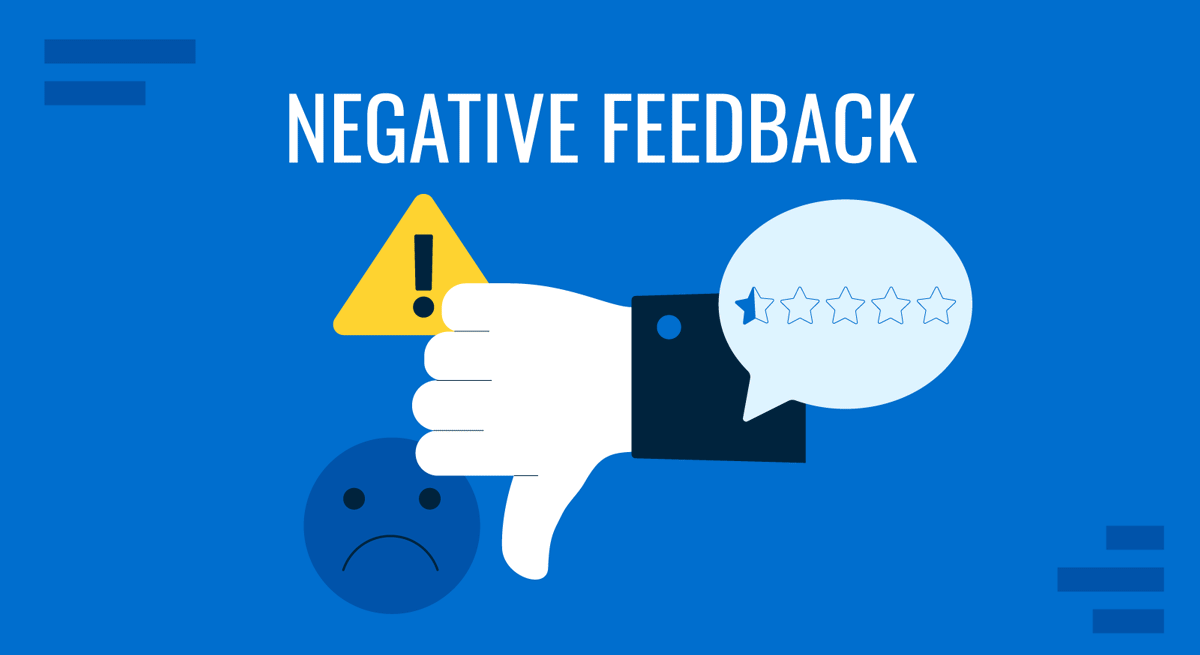
    One of the main reasons brands shy away from community management is the fear of negative feedback. It is deeply uncomfortable to see a public complaint about your product or service in your comment section. The instinct is often to delete the comment, ignore it, or respond defensively.

    This is a massive strategic error.

    Negative comments are not just public relations problems; they are public relations opportunities. When a customer complains on a public forum, you are not just responding to them. You are performing for every single other potential customer who is silently reading that thread.

    The Rule of Public Resolution: Future customers judge your brand far more by how you handle mistakes than by your highlight reel of successes.

    The Framework for Handling Public Complaints:

    • Acknowledge Quickly: Respond to the comment swiftly. Do not let the complaint sit unanswered for days, gathering momentum.
    • Validate the Frustration: Start with empathy. A simple "We are so sorry to hear you had this experience, that sounds incredibly frustrating," defuses anger instantly.
    • Take It Offline: Do not argue the specifics in a public comment section. Offer a direct, private path to resolution. "Please send us a DM with your order number so we can make this right immediately."
    • Follow Through: Ensure the issue is actually resolved behind the scenes.

    When handled correctly, a disgruntled customer whose problem is solved quickly and empathetically will often become a more fiercely loyal advocate than a customer who never had a problem in the first place. This phenomenon is known as the service recovery paradox, and community management is the vehicle that drives it.

    The Ultimate Currency: User-Generated Content (UGC)
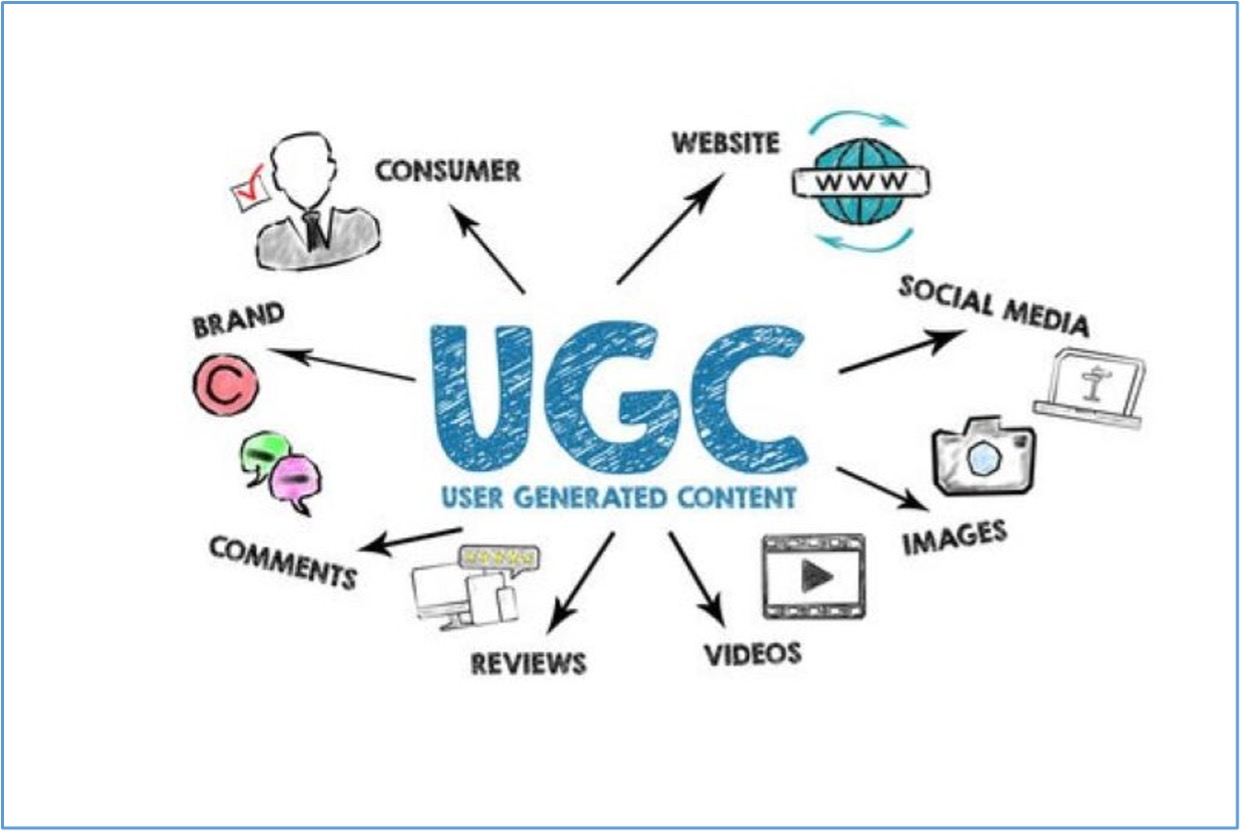
    A brand advocate is someone who loves your business so much that they do your marketing for you. They post pictures of your food, unbox your products on their Instagram Stories, and recommend your software to their LinkedIn network.

    This organic output is called User-Generated Content (UGC), and it is the most valuable marketing asset your business can possess. Consumers inherently distrust corporate advertising, but they implicitly trust peer recommendations.

    Community management is the engine that generates and amplifies UGC.

    How to Cultivate Brand Advocates:

    • Actively Monitor Brand Mentions: Do not just check your direct tags. Use social listening tools to monitor conversations where your brand name is mentioned without the "@" symbol.
    • Reward the Behavior: When a customer posts a photo of your product, leaving a generic "Thanks!" is a missed opportunity. Repost their content to your brand's official Stories, tag them, and write a genuine compliment. By elevating their content to your larger audience, you provide them with social validation. This rewards their behavior and incentivizes them (and others watching) to post about your brand again.
    • Surprise and Delight: Identify your most vocal, frequent commenters—your "superfans." Have your community manager proactively reach out to them via DM to offer a surprise discount code, early access to a new product, or just a personalized thank you. A $15 freebie given to a vocal brand advocate will yield significantly more ROI than spending that $15 on a cold Facebook Ad.

    Building a Proactive Community Strategy

    Transitioning from a passive broadcaster to an active community manager requires operational discipline. It cannot be something you just "get to" when you have five minutes of free time.

    Define Your Brand Voice and Boundaries

    Before diving into the comments, clearly document your brand's personality. Are you playful and sarcastic, or professional and authoritative? Does your brand use emojis? How do you sign off DMs? Consistency in your communication style makes your brand feel like a distinct, recognizable personality rather than a faceless corporation.

    Create an FAQ Escalation Matrix

    Community management is fast-paced, but it shouldn't be chaotic. Create an internal document that maps out exactly how your team should handle recurring interactions.

    • Where do we direct shipping inquiries?
    • Who handles partnership requests?
    • What is the exact protocol for a negative review?
      Having this matrix ensures that anyone managing your community responds accurately and efficiently without needing to seek approval for every single reply.

    Schedule Dedicated "Listening" Time

    Treat community management with the same operational respect as payroll or inventory checks. Block out specific times in the morning, afternoon, and evening strictly dedicated to clearing the DM inbox, responding to comments on the latest posts, and engaging with UGC.

    The Bottom Line: Loyalty is Managed, Not Bought

    It is relatively easy to buy attention on social media. If you have enough venture capital or a large enough marketing budget, you can force your advertisements onto thousands of screens across California. But you cannot buy loyalty.

    Loyalty is earned in the digital trenches. It is earned by the community manager who takes five minutes to walk a confused customer through a checkout process via DM. It is earned by the brand that publicly takes accountability for a delayed shipment. It is earned by the company that makes its followers feel like valued participants in a shared community, rather than just data points in an analytics dashboard.

    The businesses that dominate their industries understand that social media is a two-way street. By investing the time, resources, and emotional intelligence required to actively manage your community, you stop churning through expensive, one-time buyers and start building an army of advocates who will champion your brand for years to come.

    At Go Citrine, we do not just post and ghost. Our comprehensive social media management services include dedicated, proactive community management. We act as the digital frontline for your brand, fostering conversations, resolving friction, and turning your followers into your most powerful marketing channel. Contact our team today to learn how we can build and nurture your brand's community.
  • How to Build a Social Media Content Calendar That Actually Drives Conversions

    How to Build a Social Media Content Calendar That Actually Drives Conversions

    It is incredibly validating to watch a social media post rack up hundreds of likes, comments, and shares. The notifications ping, the dopamine hits, and it feels like your marketing efforts are finally paying off. But then, you log into your e-commerce dashboard or check your CRM, and the reality sets in: there is zero movement. No new sales. No new leads. No booked consultations.

    This disconnect is one of the most frustrating experiences for business owners and marketing managers. You are putting in the time, energy, and budget to create content, but the financial return simply is not there.

    The harsh reality of modern digital marketing is that likes, follows, and impressions do not pay payroll. While these metrics have their place, they are often a mirage that distracts you from your primary business objective: generating revenue. If your social media presence is highly active but your bottom line is stagnant, your strategy is broken.

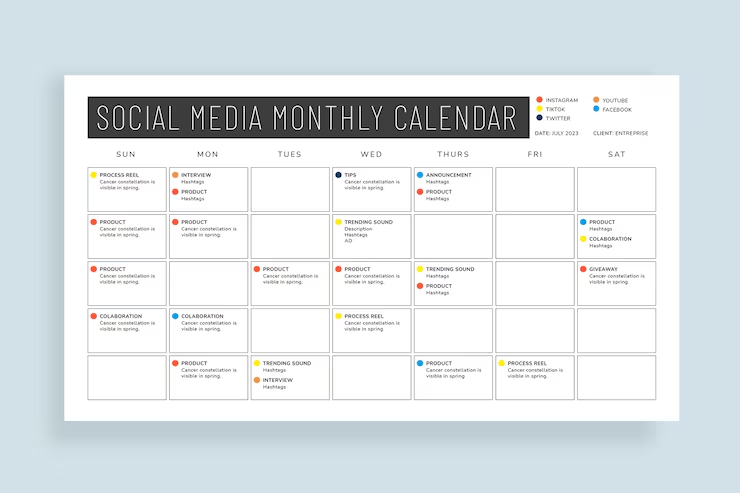
    The solution is not to post more often; the solution is to post with intentionality. You need to transition from randomly posting what "feels right" to executing a meticulously planned content calendar engineered to drive action. Here is the definitive guide to building a social media content calendar that moves beyond vanity metrics and actually drives conversions.

    The Vanity Metric Trap: Why "Going Viral" Isn't a Business Strategy

    Before building a conversion calendar, it is essential to unlearn a common misconception: High engagement equals high revenue. Many businesses fall into the trap of chasing virality. They jump on trending TikTok audio clips, post generic memes, or create highly generalized content designed to appeal to the widest possible audience. And often, it works—they get thousands of views. But those views are coming from teenagers in other countries, or passive scrollers looking for quick entertainment, rather than qualified buyers who actually need their products or services.

    The Conversion Reality: A hyper-targeted post that reaches 200 people and generates 5 high-ticket sales is infinitely more valuable to your business than a viral trend that reaches 200,000 people but generates 0 sales.

    Vanity metrics—likes, generic comments, and follower counts—tell you how many people glanced at your brand. Conversion metrics—click-through rates (CTR), link clicks, email sign-ups, and purchases—tell you how many people trust your brand enough to take action. Your content calendar must be built around the latter.

    Pillar 1: Defining Your Conversion Architecture

    A conversion is not always a direct sale. If you sell a high-ticket B2B service, expecting someone to buy a $10,000 retainer directly from a LinkedIn post is unrealistic. Your social media calendar must guide users through a logical sequence of micro-conversions.

    Before plotting out posts, define exactly what actions you want your audience to take.

    • E-commerce Brands: Direct product sales, adding items to a cart, or signing up for a VIP discount newsletter.
    • Service-Based Businesses: Booking a discovery call, filling out a lead capture form, or requesting a quote.
    • B2B Companies: Downloading a whitepaper, registering for a webinar, or subscribing to an industry newsletter.

    Once you know your ultimate goal, you can reverse-engineer your content calendar to push users toward that specific action.

    Pillar 2: The Social Media Funnel and Content Mix

    If every post on your calendar is a hard sales pitch ("Buy now!", "20% off today!"), your audience will quickly tune you out and unfollow you. Conversely, if every post is purely educational, you will build an audience of freebie-seekers who never convert.

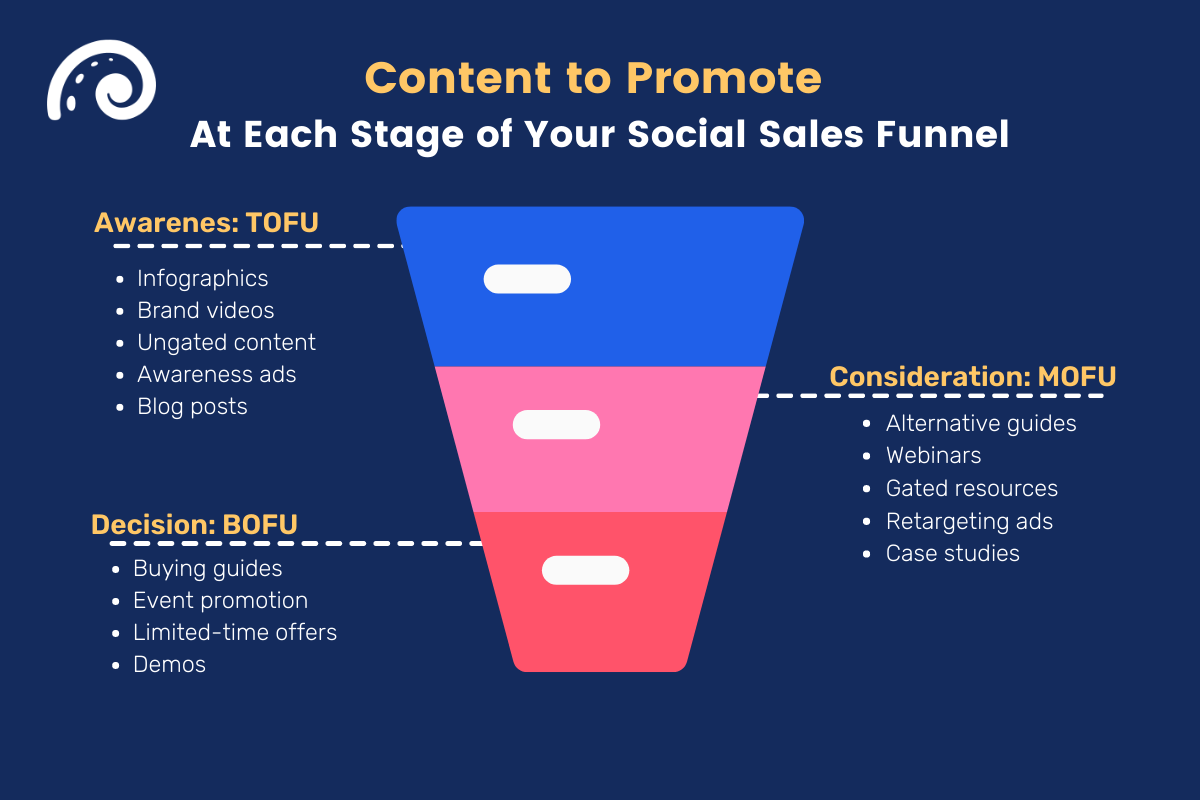
    A high-converting calendar balances different types of content that correspond to the three stages of the buyer’s journey: Top of Funnel (Awareness), Middle of Funnel (Consideration), and Bottom of Funnel (Conversion).

    To maintain this balance, follow the 4-1-1 Rule for every six posts you publish:

    • Four posts should educate, entertain, or inspire (Top/Middle of Funnel).
    • One post should share social proof or user-generated content (Middle of Funnel).
    • One post should be a direct, hard sell (Bottom of Funnel).

    Here is a breakdown of how these content pillars function in your calendar:

    Funnel Stage

    Content Goal

    Types of Content to Calendar

    Top of Funnel (TOFU)

    Capture attention and build initial brand awareness.

    Industry insights, relatable humor/memes, broad educational tips, behind-the-scenes videos.

    Middle of Funnel (MOFU)

    Build trust, prove authority, and nurture the relationship.

    Client testimonials, case studies, deep-dive tutorials, user-generated content (UGC), answering FAQs.

    Bottom of Funnel (BOFU)

    Drive the final action and ask for the sale.

    Limited-time offers, direct product features, clear calls-to-action to book a call or buy a product.

    By structuring your weekly calendar with a mix of these pillars, you ensure that you are constantly attracting new leads, nurturing existing ones, and closing those who are ready to buy.

    Pillar 3: The Anatomy of a High-Converting Post

    Placing a "Promotional Post" on your calendar for Thursday is only half the battle. The actual execution of that post determines whether it will drive a conversion. Every post designed to generate a click must follow a strict psychological framework: Hook, Value, Call-to-Action (CTA).

    1. The Hook (Stop the Scroll)

    You have roughly two seconds to stop a user from scrolling past your content. Your first sentence (or the first three seconds of a video) must aggressively grab their attention by speaking directly to their pain points or desires.

    • Weak Hook: "We offer accounting services."
    • Strong Hook: "Are you losing 20% of your agency's profit to hidden tax penalties every quarter?"

    2. The Value (Keep Them Reading)

    Once you have their attention, you must deliver immediate value. Explain why the pain point matters, introduce a new perspective, or highlight the benefits of your solution. Keep the formatting highly scannable using short paragraphs and bullet points. People do not read on social media; they skim.

    3. The Call-to-Action (Tell Them What to Do)

    This is where most businesses fail. They write a great post and then end it with nothing. If you want a conversion, you must explicitly tell the user exactly what to do next. Do not make them guess.

    • Weak CTA: "Hope this helps!" or "Link in bio."
    • Strong CTA: "Click the link in our bio to download your free Q3 Tax Prep Checklist before Friday."

    Pillar 4: Logistics and Calendar Creation

    Now that you understand the strategy and the anatomy of the content, it is time to build the actual calendar. A haphazard approach will lead to burnout and inconsistency. Consistency builds trust, and trust is a prerequisite for conversions.

    Step 1: Choose Your Posting Frequency

    Determine a realistic schedule that you or your team can maintain indefinitely. It is far better to post three high-quality, conversion-optimized pieces of content per week than to post sub-par content seven days a week.

    Step 2: Map Out Monthly Themes

    To prevent "writer's block," assign a specific theme to each month. If you are an e-commerce skincare brand, October's theme might be "Preparing Your Skin for Winter." All of your educational posts, social proof, and direct sales for that month will naturally revolve around heavier moisturizers and hydration serums.

    Step 3: Batch Create Your Content

    Do not wake up on Tuesday morning and wonder, "What should I post today?" That is a recipe for low-effort, low-converting content. Block out one or two days at the end of the month to write all the captions, design the graphics, and film the videos for the upcoming month.

    Step 4: Use a Scheduling Tool

    Load your batched content into a social media management tool (like Sprout Social, Hootsuite, or Meta Business Suite). Schedule the posts to go live at times when your specific audience is most active. This ensures your content is distributed consistently, freeing you up to focus on community management and engaging with the comments.

    Pillar 5: Data-Driven Iteration (Measuring Real ROI)

    A content calendar is a living document. It should evolve based on hard data. If you are serious about driving conversions, you must look past the native analytics provided by Instagram or LinkedIn and track the actual user journey.

    Implement UTM Parameters

    A UTM (Urchin Tracking Module) parameter is a simple snippet of code you attach to the end of your URLs. Instead of just putting yoursite.com/product in your Facebook post, you use a link that tells your analytics software exactly where the click came from.

    This allows you to look at your Google Analytics (GA4) dashboard and say definitively, "The video we posted on Tuesday generated 45 link clicks and resulted in $1,200 in direct sales."

    A/B Test Your Variables

    If a post fails to convert, do not just assume the product is flawed. Often, it is the delivery. Test different variables systematically:

    • Test the same video with two different hooks.
    • Test a direct, hard-sell CTA against a softer, value-driven CTA.
    • Test posting a long-form text post versus a carousel graphic.

    Focus on the Click-Through Rate (CTR)

    The ultimate metric of social media success for a business is the Click-Through Rate. If your post reaches 1,000 people and 50 people click the link to visit your website, you have a 5% CTR. If your CTR is high, but your sales are low, your social media strategy is working perfectly, but your website landing page is failing to convert.

    Stop Guessing, Start Converting

    Building a social media content calendar that actually drives revenue requires a fundamental shift in mindset. It requires you to stop chasing the dopamine of viral likes and start focusing on the psychology of your buyer.

    By mapping your content to the sales funnel, mastering the anatomy of a hook-driven post, and rigorously tracking your data, you transform your social media presence from a digital billboard into a predictable, revenue-generating machine.

    Navigating algorithms, tracking UTM parameters, and consistently producing high-quality content can be overwhelming for a growing business. At Go Citrine, our social media management team specializes in building and executing data-driven content calendars designed for one singular purpose: turning your followers into loyal, paying customers. Contact our team today to discover how we can transform your social media strategy.