Category: SEO, SEM & PPC

  • Standing Out in the Golden State: Digital Marketing Strategies for California Startups

    Standing Out in the Golden State: Digital Marketing Strategies for California Startups

    California is undeniably the global epicenter of startup innovation. From the venture capital boardrooms of Silicon Valley and the bustling biotech hubs in San Diego to the vibrant, creator-driven tech scene in Los Angeles, the Golden State is where bold ideas are transformed into billion-dollar realities.

    However, this unparalleled concentration of talent and capital comes with a significant downside: deafening noise.

    California is the most saturated and hyper-competitive business environment on the planet. For every groundbreaking SaaS platform, direct-to-consumer lifestyle brand, or green-tech innovation launching today, there are dozens of well-funded competitors vying for the exact same audience. In this ecosystem, simply having a superior product is no longer a guarantee of success. If your target market does not know you exist, or if your digital presence fails to instantly communicate your value, your startup will become a cautionary tale of "what could have been."

    To survive the critical first years and scale effectively, California startups must abandon traditional, slow-moving marketing tactics. You need a surgical, data-backed approach designed to manage your burn rate while maximizing visibility. Here is how new businesses can cut through the noise and dominate the Golden State using a synchronized mix of agile web development, hyper-targeted PPC, and community-driven social media.

    The Startup Bottleneck: Time vs. Traction

    Before deploying a marketing strategy, founders must understand the unique constraints of the startup lifecycle. In most cases, you are operating on a strict runway. You do not have the luxury of waiting twelve months for a slow-burn SEO strategy to generate leads, nor do you have the budget to blanket the state with generalized billboard advertising.

    You need to prove traction to your investors, and you need to generate revenue to extend your runway. This requires a marketing strategy that is highly adaptable, measurable down to the penny, and capable of generating immediate intent-driven traffic.

    The California Reality: Customer Acquisition Costs (CAC) in California's major tech hubs are among the highest in the world. A spray-and-pray marketing approach will drain your seed funding in weeks. Precision is your only defense.

    To achieve this precision, your digital ecosystem must be built on three core pillars.

    Pillar 1: Agile Web Development (The Foundation of Conversion)

    Your website is the digital headquarters of your startup. If an investor or a potential customer clicks your ad and lands on a clunky, slow, or confusing website, you have lost them forever. In a tech-savvy state like California, user expectations for digital experiences are incredibly high.

    For startups, a traditional "waterfall" web development approach—where you spend six months perfectly designing a massive website before launching—is a fatal mistake. By the time the site goes live, your product features or target market may have already pivoted.

    Instead, startups must embrace Agile Web Development.

    What is Agile Web Development?

    Agile development is an iterative process. It focuses on launching a lean, highly optimized Minimum Viable Product (MVP) website as quickly as possible, and then continuously updating, A/B testing, and refining it based on real user data.

    Feature

    Traditional Web Development

    Agile Web Development

    Launch Timeline

    3 to 6 months

    3 to 6 weeks

    Flexibility

    Rigid; hard to change post-launch

    Highly adaptable; expects constant changes

    Data Usage

    Relies on upfront assumptions

    Relies on real-time user behavior

    Startup Fit

    Poor (Burn rate is too high)

    Perfect (Scales with the business)

    Key Agile Focus Areas for Startups:

    • Blazing Fast Load Times: You must pass Google's Core Web Vitals. If your site takes longer than three seconds to load, your bounce rate will skyrocket. Agile developers focus on lightweight code, compressed media, and headless architectures to ensure lightning-fast rendering.
    • Frictionless UX/UI: Startups often suffer from the "curse of knowledge," explaining their product using dense, highly technical jargon. Your website's User Experience (UX) must distill complex ideas into simple, easily digestible value propositions. The path from the homepage to the checkout (or lead form) must be completely frictionless.
    • Modular Landing Pages: When running ads, you need the ability to spin up dedicated, highly relevant landing pages in minutes, not days. An agile website architecture allows your marketing team to build and test custom pages for specific campaigns without needing a developer to rewrite code.

    Pillar 2: Hyper-Targeted PPC (The Immediate Engine)

    Search Engine Optimization (SEO) is crucial for long-term sustainability, but it takes time. When you need to generate users today, Search Engine Marketing (SEM) and Pay-Per-Click (PPC) advertising are your primary engines.

    However, running Google Ads in California can be terrifyingly expensive. Bidding on broad terms like "accounting software" or "apparel brand" will pit you against massive corporations with bottomless ad budgets. To win, startups must go niche.

    Master the Long-Tail Keyword

    Instead of targeting broad, highly competitive terms, bid on "long-tail" keywords. These are longer, highly specific phrases that indicate high purchase intent.

    • Instead of: "HR software" (High cost, low intent)
    • Bid on: "HR compliance software for California biotech startups" (Lower cost, massive intent)

    While long-tail keywords have lower search volumes, the users searching for them know exactly what they want. When they click your ad, they are significantly more likely to convert.

    Leverage Geo-Fencing and Location Targeting

    California's geography is massive and highly segmented. If you have a B2B SaaS product designed for the entertainment industry, you do not need to show your ads in Sacramento or Fresno.

    Google Ads and LinkedIn Ads allow you to utilize hyper-specific location targeting. You can drop a digital "fence" around specific areas—such as a 5-mile radius around Silicon Beach in Los Angeles or the Financial District in San Francisco. You can even target users based in specific corporate office parks. This ensures your limited budget is only spent on the exact ZIP codes where your target buyers work and live.

    Competitor Conquesting

    One of the most aggressive and effective PPC strategies for a startup is competitor conquesting. This involves bidding on your competitors' brand names. When a user searches for the established legacy player in your industry, your ad appears at the top of the page, typically with a headline highlighting your competitive advantage (e.g., "Tired of [Competitor Name]? Try a Faster, Cheaper Alternative."). This allows you to siphon high-intent leads directly from your biggest rivals.

    Pillar 3: Hyper-Focused Social Media (The Brand Builder)

    Startups often misinterpret the purpose of social media. They view it as a broadcast channel to shout their press releases into the void, or they desperately chase viral TikTok trends that have nothing to do with their core product.

    In a saturated market, social media is not about going viral; it is about building a fiercely loyal community. To stand out, California startups must be highly intentional about where they spend their time and what they say.

    Choose Your Battleground

    You do not need to be on every platform. You need to be where your target audience lives.

    • LinkedIn: If you are a B2B SaaS startup, LinkedIn is non-negotiable. It is the most powerful B2B targeting platform on earth. You can run ads targeting users by their specific job title, company size, and industry.
    • Instagram & TikTok: If you are a direct-to-consumer (DTC) lifestyle brand based in LA, these visual platforms are your bread and butter. Focus on leveraging California's massive creator economy to drive authentic user-generated content.
    • X (formerly Twitter): Excellent for Web3, crypto, and deep-tech startups looking to engage directly with thought leaders and venture capitalists.

    Founder-Led Content

    Consumers and investors are highly skeptical of faceless corporate brands. They want to know the humans behind the innovation. The most successful startup social media strategies in California rely heavily on "Founder-Led Content."

    Founders should use their personal LinkedIn or X accounts to document the startup journey transparently. Share your failures, your pivots, and the hard lessons you are learning. Explain why you are building the product, not just what the product does. Authenticity cuts through the corporate noise faster than any polished advertisement.

    Community over Broadcasting

    Stop treating your followers like an audience and start treating them like a community. Actively reply to comments, host live Q&A sessions, create private Discord or Slack channels for your early adopters, and solicit their feedback on your product roadmap. When you make your early users feel like co-creators rather than just consumers, they transform from passive followers into vocal brand advocates.

    Tying It All Together: The Omnichannel Growth Loop

    The true magic happens when these three pillars—agile web dev, targeted PPC, and hyper-focused social media—stop operating in silos and start working together as an omnichannel growth loop.

    Imagine this scenario: A startup founder posts an insightful, authentic thread on LinkedIn about a major pain point in their industry (Social Media). A targeted prospect reads it, relates to it, and clicks the link in the founder's bio. They are taken to a blazing-fast, highly optimized landing page (Agile Web Dev) that perfectly explains the solution. The prospect is interested but not ready to buy, so they leave. Later that week, as they are searching for solutions on Google, they see a highly relevant, localized ad from your company (Hyper-Targeted PPC). Because they already trust the founder from LinkedIn, and the website experience was flawless, they click the ad and convert.

    This is how modern startups scale. It is not about one silver bullet; it is about creating a cohesive, interconnected digital web that captures attention, builds trust, and relentlessly drives action.

    Partnering for Speed and Scale

    Executing an omnichannel digital strategy requires deep technical expertise, constant data analysis, and unwavering consistency. For a startup founder already juggling product development, investor relations, and hiring, managing this complex marketing ecosystem internally is nearly impossible.

    This is where partnering with a specialized agency becomes a strategic advantage.

    At Go Citrine, we are deeply embedded in the California business landscape. We understand the high stakes, the fast pace, and the aggressive growth targets that startups face. By partnering with us, you gain immediate access to an entire team of seasoned developers, PPC analysts, and social media strategists. We build the agile foundations, deploy the hyper-targeted campaigns, and craft the compelling narratives required to cut through the noise.

    You built a product that deserves to be seen. Stop letting your competitors dominate the conversation. Let Go Citrine build the digital marketing engine that turns your California startup into an industry leader.
  • The Ultimate Guide to Local SEO for California Businesses

    The Ultimate Guide to Local SEO for California Businesses

    California boasts the largest economy in the United States and the fifth largest in the world. From the tech hubs of Silicon Valley and the entertainment centers of Los Angeles to the bustling agricultural heartlands of the Central Valley, the business landscape here is incredibly lucrative—and fiercely competitive.

    At Go Citrine we understand how important Local SEO is for your business. If you run a brick-and-mortar store or a service-area business in the Golden State, relying on foot traffic or word-of-mouth is no longer sufficient. When Californians need a product or service, they turn to their smartphones. They search for "near me," "open now," or specific city-based queries. If your business does not appear in the top three results of that localized search, your competitors are capturing your revenue.

    This is where Local Search Engine Optimization (SEO) comes in. Local SEO is the practice of optimizing your digital presence to attract more business from relevant local searches. This guide will walk you through the exact strategies you need to dominate local search results in California, outrank your competitors, and drive high-intent customers directly to your door.

    Traditional SEO vs. Local SEO

    Before diving into the tactics, it is important to understand how Local SEO differs from traditional, broad-scale SEO.

    Feature

    Traditional SEO

    Local SEO

    Target Audience

    National or Global

    City, Region, or Neighborhood

    Primary Goal

    Ranking high in organic search results

    Appearing in the Google Local Pack (Map Pack)

    Key Ranking Factors

    Backlinks, Content Depth, Site Speed

    Google Business Profile, Proximity, Reviews

    Ideal Business Type

    E-commerce, SaaS, Content Publishers

    Plumbers, Restaurants, Dentists, Boutiques

    While traditional SEO focuses on trust and authority, Local SEO focuses heavily on relevance and proximity. Google wants to provide the user with the best possible option that is closest to their physical location.

    Step 1: Master Your Google Business Profile

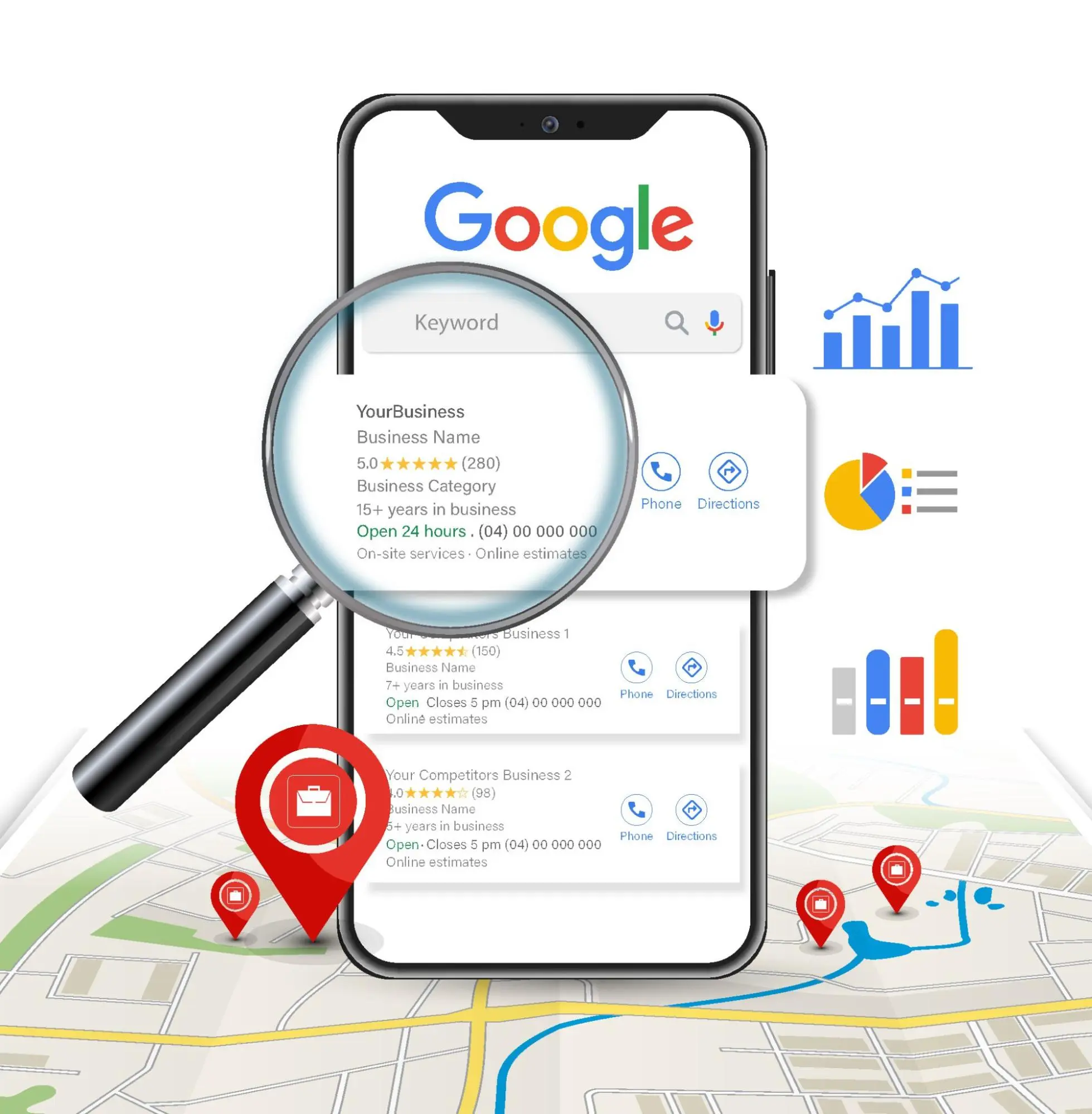
    Your Google Business Profile (GBP) is the cornerstone of your local search strategy. It is the listing that appears on Google Maps and in the local results of Google Search. Optimizing this profile is the single most impactful step you can take.

    Claim and Verify Your Profile

    If you have not already, you must claim your business listing through Google. This typically involves Google sending a postcard with a verification code to your physical address or requiring a video verification of your storefront.

    Complete Every Data Point

    Google rewards thoroughness. Do not leave any fields blank. Ensure the following are accurate:

    • Business Name (Use your actual legal name, do not stuff keywords here)
    • Physical Address (Or service areas if you do not see customers at your location)
    • Primary and Secondary Categories (Be as specific as possible)
    • Phone Number
    • Website URL
    • Hours of Operation (Crucial to update for holidays)

    Leverage Photos and Videos

    Listings with photos receive significantly more requests for directions and clicks to their websites. Upload high-quality, well-lit photos of the exterior of your building, the interior, your team at work, and your products.

    Publish Regular GBP Posts

    Just like social media platforms, Google Business Profile allows you to publish updates, offers, and events. These posts appear directly in the search results and signal to Google that your business is active and engaged. Aim to post at least once a week.

    Step 2: Develop a Hyper-Local Keyword Strategy

    Targeting the word "plumber" is a waste of time and money if you operate exclusively in San Diego. Your content must reflect the specific areas you serve.

    Understand User Intent

    When someone types "Los Angeles corporate lawyer," they are looking to hire someone. When they type "California business law," they are likely looking for information. Your local keyword strategy should focus heavily on high-intent, transactional queries.

    Map Keywords to Service Areas

    California is massive, and cities are spread out. If you are a roofing contractor based in San Jose, you do not just want to rank for "San Jose roofer." You also want to capture traffic from surrounding areas like Santa Clara, Sunnyvale, and Cupertino. Create a list of core services and multiply them by the cities and neighborhoods you serve.

    Implement Keywords on Your Website

    Once you have your list, these hyper-local keywords must be integrated naturally into your website's architecture. Include them in your page titles, meta descriptions, header tags, and body copy.

    Step 3: Optimize On-Page Elements for Local Search

    Your website must clearly communicate your location to search engine crawlers. This goes beyond just writing your address on the contact page.

    Create Dedicated Location Pages

    If you have multiple locations across California, or if you serve several distinct regions, create a unique page for each. A generic "Locations" page forces local keywords to compete against each other. Instead, build specific URLs like yoursite.com/locations/san-francisco and yoursite.com/locations/oakland.

    Embed Google Maps

    On your contact page and individual location pages, embed an interactive Google Map pointing directly to your verified business listing.

    Add Local Schema Markup

    Schema markup is code that you put on your website to help search engines return more informative results for users. By implementing "LocalBusiness" schema, you are feeding Google exact, structured data about your business name, address, phone number, and operating hours.

    Step 4: Build Local Citations and Maintain NAP Consistency

    A citation is any online mention of the name, address, and phone number (NAP) for a local business. Citations occur on local business directories, on websites and apps, and on social platforms.

    The Importance of NAP Consistency

    Search engines use citations to verify the accuracy of your business data. If your address is listed one way on Yelp, another way on the Better Business Bureau, and slightly differently on your website, Google loses trust in your data. A lack of trust results in lower rankings. Ensure your NAP is identical across the entire internet.

    Top Directories for California Businesses

    You need to be listed in major national data aggregators, but also regional and industry-specific directories. Ensure your profile is robust on:

    • Yelp (Massively important in California)
    • Apple Maps
    • Bing Places
    • Better Business Bureau (BBB)
    • Nextdoor
    • Local Chambers of Commerce (e.g., Los Angeles Chamber of Commerce)

    Step 5: Implement a Proactive Review Management Strategy

    Online reviews are a significant ranking factor for the Google Local Pack. Furthermore, they are the primary driver of consumer trust. A fully optimized profile will not generate revenue if it possesses a two-star rating.

    Ask for Reviews Systematically

    Do not wait for customers to leave reviews organically. Create a system to ask for them. This can be an automated email sent a few days after a purchase, a QR code printed on physical receipts, or a simple verbal request at the end of a successful service call.

    Respond to Everything

    You must respond to every single review your business receives.

    • For positive reviews, thank the customer by name and mention the specific service they received (this naturally inserts keywords into your profile).
    • For negative reviews, remain professional, apologize for the experience, and offer to take the conversation offline to resolve the issue. Future customers judge you more on how you handle negative feedback than on the positive praise.

    Step 6: Acquire Localized Backlinks

    Backlinks—links from other websites pointing to yours—are a major ranking factor in all forms of SEO. For Local SEO, the geographical relevance of the linking site is just as important as its domain authority.

    How to Earn Local Links in California

    • Sponsor Local Events: Sponsor a Little League team, a 5K charity run, or a community festival. These organizations almost always link to their sponsors on their websites.
    • Join Local Associations: Becoming a member of local business groups, trade associations, and networking chapters usually comes with a backlink from their member directory.
    • Leverage Digital PR: Pitch unique stories or data about your business to local California news outlets, community blogs, and local podcasters.
    • Partner with Neighboring Businesses: If you are a wedding photographer, partner with local florists and venues to link to each other as preferred vendors.

    Step 7: Track, Measure, and Iterate

    Local SEO is not a set-it-and-forget-it task. The California market is too dynamic. You must continuously monitor your performance to ensure your strategies are yielding a return on investment.

    Key Metrics to Monitor

    • Google Business Profile Insights: Track the number of direct searches versus discovery searches, the number of calls generated, and the number of direction requests.
    • Local Keyword Rankings: Use rank-tracking software to see where your website stands for your target local queries. Keep in mind that local rankings fluctuate based on the physical location of the person searching.
    • Organic Traffic via Google Analytics (GA4): Monitor the volume of traffic arriving on your location-specific landing pages and track their conversion rates.

    Partnering with Go Citrine, a California Digital Marketing Agency

    Executing a comprehensive Local SEO campaign requires time, technical expertise, and an intimate understanding of the California market. Business owners often find themselves stretched too thin trying to manage their daily operations while simultaneously acting as an SEO specialist, content writer, and web developer.

    At Go Citrine, we specialize in helping California businesses conquer their local markets. Based right here in the state, our team understands the unique search behaviors, regional nuances, and competitive landscapes of California's diverse cities. We handle the technical audits, the directory management, the content creation, and the review generation strategies, allowing you to focus on what you do best: running your business.

    Whether you are a startup opening your first storefront in San Diego or an established enterprise expanding across the Bay Area, our Local SEO services are designed to maximize your visibility, drive high-quality foot traffic, and increase your bottom line.